Bianca Weber · 5 September 2026
Navigating Subtle Shifts in Search Visibility for Solo-Run Digital Properties via Layered Content Ecosystems
Solo-run digital properties encounter ongoing adjustments in search rankings that stem from refinements in how engines evaluate content depth, topical authority, and user engagement patterns, and these changes often unfold gradually rather than through dramatic overhauls. Observers note that operators who maintain multiple interconnected content layers tend to sustain steadier visibility because the structure distributes risk across varied formats while reinforcing core themes through internal connections. Research indicates that sites relying on single-layer approaches experience more pronounced fluctuations during periodic algorithm refreshes, whereas those building ecosystems report steadier performance metrics over multi-year periods.
Understanding Subtle Shifts in Search Visibility
Search engines adjust ranking factors at intervals that include core updates and smaller refinements, and data from monitoring tools shows these modifications frequently target signals like content freshness, entity recognition, and cross-page relevance rather than outright penalties. In September 2026, several engines rolled out tweaks that placed greater emphasis on structured data usage and multi-format consistency, which affected how solo operators appeared in featured snippets and knowledge panels. Those who track performance analytics observe that visibility dips often trace back to gaps in content layering instead of outright quality issues, and recovery follows when additional layers such as glossaries, case examples, and update logs get added to existing pillars.
Independent sites differ from larger operations because they lack dedicated teams for constant monitoring, yet the same ranking principles apply across scales. Studies from academic sources reveal that solo properties using layered approaches achieve comparable topical coverage to enterprise sites through deliberate repetition of key entities across formats, and this repetition strengthens signals that engines use for authority assessment. What's interesting is how small additions, like embedding video transcripts or interactive elements, create compounding effects that buffer against isolated ranking drops.
Building Layered Content Ecosystems
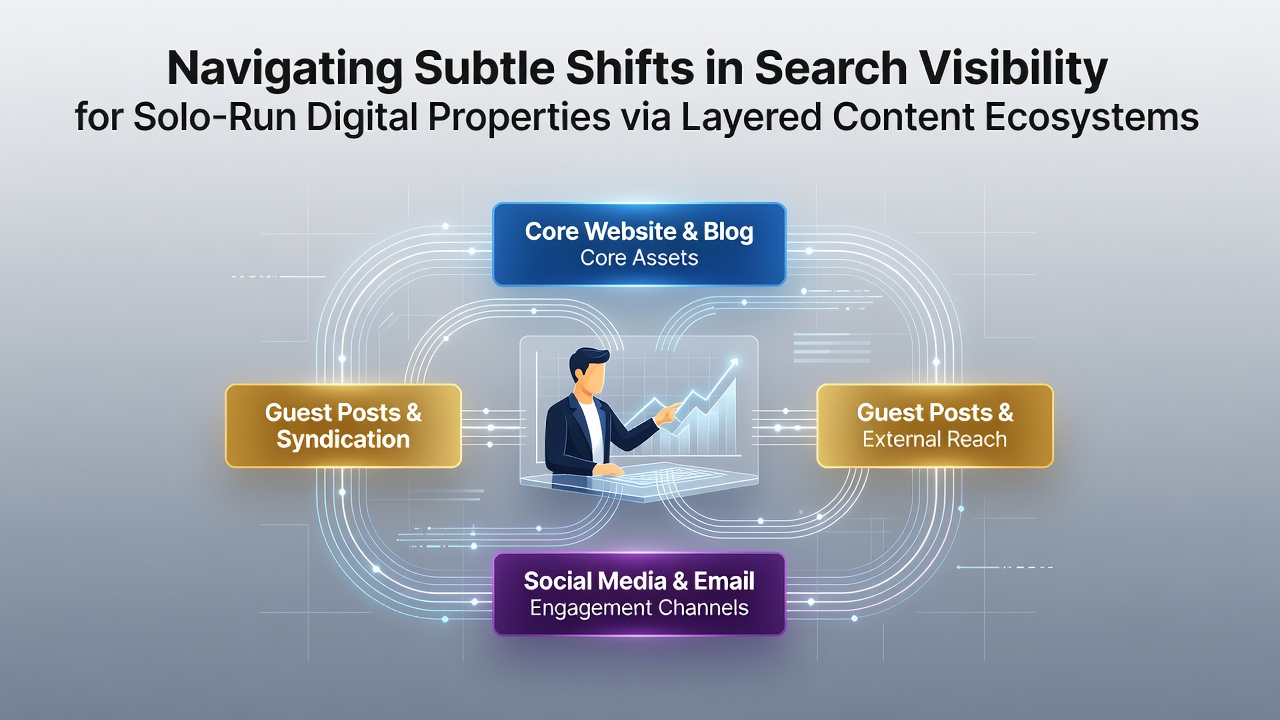
Layered ecosystems start with a central pillar page that covers a broad topic comprehensively, then branch into supporting clusters that address subtopics through articles, guides, and supplementary media. Operators connect these layers via contextual internal links and shared metadata schemas, which helps engines map relationships without requiring external signals. Evidence from industry reports shows that sites with at least three distinct layers per pillar maintain higher average positions during algorithm shifts because the structure provides multiple entry points for crawlers and users alike.
Content formats within layers include long-form text, data visualizations, downloadable resources, and community-sourced updates that refresh periodically. Researchers have documented cases where solo sites incorporated user-generated examples into existing layers and recorded measurable gains in dwell time metrics, which engines interpret as relevance indicators. But here's the thing: the layering must remain coherent, since disconnected additions can dilute topical focus and trigger visibility adjustments in the opposite direction.

Practical Approaches for Solo Operators
Operators begin by auditing current content for coverage gaps, then prioritize new layers that fill those gaps while reusing core entities across formats. Analytics platforms provide data on which subtopics generate impressions without corresponding clicks, and those figures guide decisions on whether to expand into video summaries or FAQ expansions. According to OECD digital economy analysis, properties that diversify content delivery channels demonstrate greater resilience to ranking volatility across multiple regions.
Regular maintenance involves scheduling content refreshes that align with seasonal search patterns, and this practice keeps layers current without requiring full rewrites. People who maintain update logs within their ecosystems note improved consistency in how engines surface older pages, since the logs signal ongoing relevance. Yet the process stays manageable for solo operators when they batch similar updates across multiple layers instead of treating each piece independently.
Monitoring and Adjustment Techniques
Performance tracking relies on a combination of search console data, third-party rank trackers, and engagement metrics pulled from site analytics. When subtle drops appear in specific clusters, operators examine whether supporting layers need reinforcement through additional examples or cross-links. Figures from research institutions indicate that sites applying incremental adjustments recover visibility faster than those making broad changes, and this pattern holds particularly for properties without external link dependencies.
Geographic variations in search behavior also influence outcomes, with data from Canadian digital reports showing that regional language nuances affect how layered content performs in localized results. Operators adapt by tailoring secondary layers to address location-specific queries while preserving the primary pillar's broader scope, and this dual approach supports visibility across multiple search environments simultaneously.
Conclusion
Layered content ecosystems provide solo-run digital properties with a structural method for managing search visibility amid gradual algorithm refinements, and the approach centers on interconnected formats that reinforce topical signals without demanding constant external inputs. Operators who implement systematic layering and monitoring practices position their sites to handle shifts such as those observed in September 2026, where emphasis on structured elements and multi-format consistency became more pronounced. Sustained application of these methods yields measurable stability in rankings over extended periods, supported by patterns documented across various studies and regional datasets.